
Difference Between Tumor and Cancer – Symptoms, Types & Important Facts
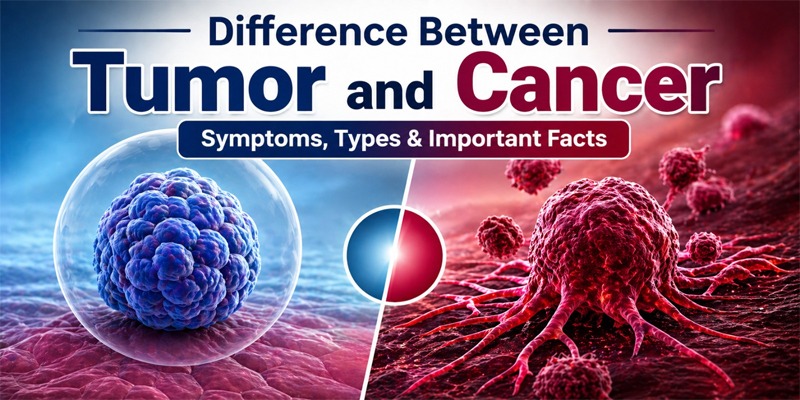
Whenever a doctor tells a patient or their family that "a lump has been found," the very first question that follows is — "Is it cancer?" This fear is completely natural, because most people use the words tumor and cancer interchangeably. However, there is a very important difference between the two that every patient and their family must understand. Dr. Yuvraj Singh, senior radiation oncologist and cancer specialist in Kanpur, regularly addresses this concern with his patients during consultations. He emphasizes that not every tumor is cancer, and understanding this distinction has a direct impact on treatment decisions and peace of mind.
What Is a Tumor?
In a healthy body, cells follow a disciplined cycle — they are born, they grow, they divide, and eventually they die in a controlled manner. When this cycle is disrupted for any reason and cells start multiplying uncontrollably, they form a mass or lump in the body. This mass is called a tumor. A tumor can develop in any part of the body — the brain, breast, uterus, skin, or any internal organ. Some tumors remain small and cause no discomfort throughout a person's life, while others grow large enough to press on nearby structures and create problems. Proper medical testing is the only way to determine the true nature of a growth.
Types of Tumors — A Detailed Explanation
1. Benign Tumor (Non-Cancerous)
A benign tumor is not cancer. It grows slowly, stays confined to one location, and does not invade surrounding tissues or spread to distant parts of the body. In many cases, a benign tumor may cause no significant discomfort and may not require any treatment at all. A lipoma, for example, is a soft, fatty lump that forms just under the skin and can remain unchanged for years without causing harm. Similarly, uterine fibroids are benign tumors that may cause heavy periods or abdominal discomfort, but they are not cancerous and can be managed effectively with medication or surgery if needed. However, the location of a benign tumor can sometimes make it more serious — for instance, a benign brain tumor can still be dangerous because it may press on critical areas of the brain, even without spreading.
2. Malignant Tumor (Cancer)
A malignant tumor is what we refer to as cancer. It behaves very differently from a benign tumor. It grows rapidly, invades nearby tissues, and has the ability to travel through the bloodstream or lymphatic system to reach distant organs. This spreading process is known as metastasis, and it is what makes cancer life-threatening. For example, if breast cancer is not treated in time, it can spread to the lymph nodes, lungs, liver, or bones. Similarly, lung cancer can spread to the brain. Cancer cells do not follow the body's normal rules — they neither die when they should nor stay where they started.
3. Pre-Malignant Conditions (Pre-Cancerous Stage)
Between benign and malignant tumors lies an important third category — pre-malignant or pre-cancerous conditions. These are abnormal growths or cellular changes that are not yet cancer but carry a high risk of becoming cancer if left untreated. Colon polyps are a common example. They are often discovered during routine screening and may be harmless at the time of detection, but certain types can gradually turn into colon cancer over time. Cervical dysplasia is another example — abnormal changes in the cells of the cervix that can slowly progress to cervical cancer if not addressed.
Help Is Here—Call Now!
What Is Cancer?
Cancer is not simply a growth — it is a disease of completely uncontrolled and abnormal cell behavior. Cancer cells ignore all the signals that normally regulate growth and death. They continue to grow, avoid programmed cell death, invade nearby tissues, and spread to other organs. Unlike a benign tumor, cancer can disrupt multiple systems of the body over time. An important distinction that is often overlooked is that not all cancers form a visible lump. Blood cancers such as leukemia do not produce a solid tumor but are still serious malignancies that require urgent treatment.
The Core Difference: Growing vs. Spreading
The most practical way to understand the difference between a tumor and cancer is this — a benign tumor only grows, while cancer grows and spreads. A benign tumor stays localized — same place, same structure, contained within itself. Cancer, on the other hand, grows and moves to new parts of the body, causing damage wherever it goes. This ability to spread is precisely what makes cancer more dangerous and why it demands more aggressive treatment. Without spread, many cancers can actually be cured completely — which is why early detection makes such a profound difference in outcomes.
Metastasis — Why Cancer Becomes Dangerous
Metastasis is the process by which cancer cells break away from the original tumor and travel through the blood vessels or lymphatic channels to reach distant organs. Once they arrive at a new location, these cells begin to multiply again, forming secondary tumors. Prostate cancer, for example, frequently spreads to the bones. Breast cancer commonly forms secondary deposits in the bones and lungs.
Symptoms — How to Tell the Difference
Both benign tumors and cancer can initially present with similar symptoms, but there are certain warning signs that should never be ignored. A benign tumor typically appears as a slowly growing lump that causes minimal discomfort and has little or no effect on overall health. Cancer, on the other hand, often shows more aggressive signs. A rapidly enlarging lump, unexplained weight loss, persistent fatigue, unusual bleeding, or changes in skin appearance are important signals that demand immediate medical attention.
Causes and Risk Factors
Both tumors and cancer can develop due to a combination of factors, and understanding these helps in prevention. Lifestyle plays the most significant role. Tobacco use — whether smoking or chewing — remains one of the leading causes of lung, oral, and throat cancers. Alcohol consumption, an unhealthy diet, obesity, and a sedentary lifestyle also increase cancer risk considerably. Genetic factors play a role as well — individuals with a family history of breast cancer or colorectal cancer need to be more vigilant about regular screening.
Diagnosis — Why Biopsy Is Non-Negotiable
One of the most common mistakes patients make is drawing conclusions about the nature of a tumor based solely on a scan. Whether it is a CT scan, MRI, or ultrasound — imaging can show the location and size of a mass, but it cannot definitively confirm whether it is benign or malignant. The only reliable method to confirm whether cancer is present is a biopsy — a procedure in which a small sample of tissue is taken from the growth and examined under a microscope by a pathologist. Without a biopsy, no diagnosis is complete.
Treatment — Two Entirely Different Approaches
The treatment for a benign tumor and cancer differs enormously, which is another reason why getting the right diagnosis matters so much. Benign tumors often require only observation — if the growth is small and causing no symptoms, a wait-and-watch approach is perfectly reasonable. If the tumor is pressing on a structure or growing noticeably, simple surgical removal is usually sufficient, with no further treatment needed. Cancer treatment is far more comprehensive and depends on the type and stage of the disease. Early-stage cancer may be cured with surgery alone.
Help Is Here—Call Now!
Three Real-World Examples — Understanding the Difference
Consider three different patients to see how the same general concern — "I have a lump" — can mean entirely different things. The first patient has a soft lump on the arm that has been there for five years, has not grown, and causes no pain. This is most likely a lipoma, a benign tumor that may never require any treatment. The second patient has a lump in the breast that has visibly grown in three months, with slight skin changes over the area. This raises a strong suspicion of cancer and requires immediate evaluation. The third patient has colon polyps found during a routine colonoscopy.
When Should You Seek Medical Advice?
Any change in the body that feels unusual and does not resolve on its own within two to three weeks should not be dismissed. A lump anywhere in the body, unexplained weight loss, persistent fatigue without a clear reason, continuous pain, abnormal bleeding, difficulty swallowing, or changes in the skin — all of these are signs that warrant a consultation with a cancer specialist.
Common Myths — Cleared With Facts
The first and most widespread myth is that every tumor is cancer. This is entirely false — a large number of tumors are benign and may never cause serious problems. The second myth is that cancer always causes pain. In reality, early-stage cancer is often completely painless, which is exactly why it goes undetected for so long. The third myth is that surgery spreads cancer. This is an outdated and incorrect belief — surgical removal is one of the most effective treatments for many types of cancer. The fourth myth is that if a scan looks normal, everything is fine.
Prevention and the Power of Early Detection
While not every cancer can be prevented, a significant number of cases can be avoided or caught early enough to be cured completely. Quitting tobacco entirely, maintaining a balanced and nutritious diet, staying physically active, limiting alcohol intake — these lifestyle choices collectively act as a shield against cancer. Vaccines against HPV and Hepatitis B offer protection against cervical and liver cancer respectively.
Final Thought — Understand, Don't Panic
Having a tumor does not mean having cancer — but it does mean that proper evaluation is necessary. The real difference between the two lies in behavior: benign tumors stay in one place, while cancer grows and spreads to other parts of the body. The right response to finding a lump or noticing an unusual change is not panic, but it is also not ignorance. Seek evaluation, get the right tests done, and consult a specialist who can give you a clear and honest picture of your situation.